Knowledge gaps
Residents and aspiring entrepreneurs need usable skills, not just information they cannot apply.
Economic opportunity should not depend on where someone lives or the resources they were born with. We are developing practical education, targeted support, and community programs that help residents and entrepreneurs overcome barriers to opportunity and build more secure futures.
Education. Economic opportunity. Stronger neighborhoods.
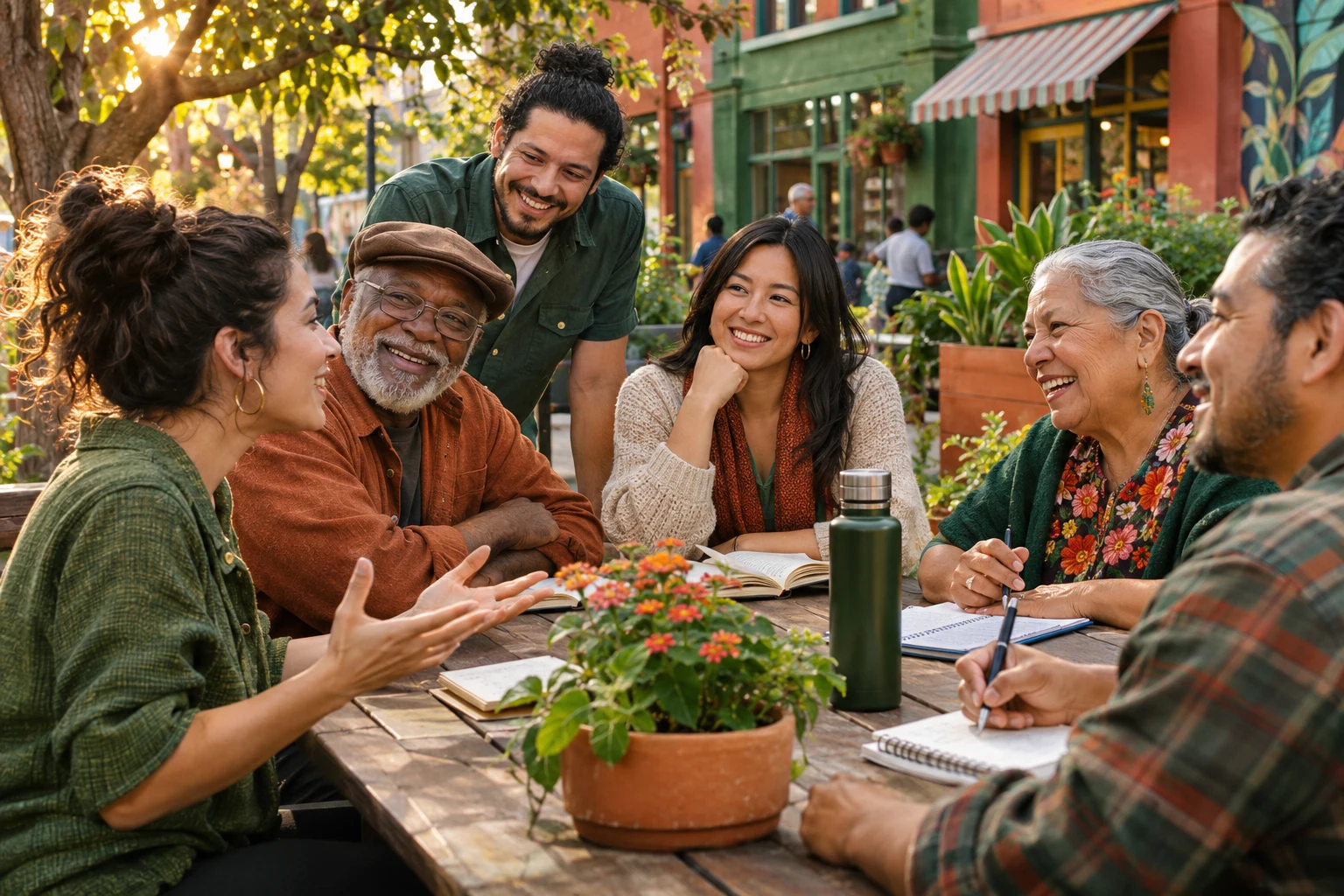
A lack of practical financial knowledge, affordable support, and trusted local connections can limit a person's choices. When economically distressed neighborhoods face these barriers for years, the effects reach households, entrepreneurs, and future generations.
Our purpose is to remove barriers to economic opportunity so more people can build financial stability, participate meaningfully, and shape their own futures.
Residents and aspiring entrepreneurs need usable skills, not just information they cannot apply.
Some people face persistent barriers to capital, guidance, technology, and essential resources.
Economic distress can weaken employment pathways, access to services, and community resilience.
Our focus is on underserved residents, aspiring entrepreneurs, and neighborhoods facing persistent economic barriers.
We begin by understanding the barriers people face. We connect practical education, targeted assistance, trusted partnerships, and accessible technology to help people overcome those barriers. We measure success through stronger capabilities, greater economic opportunity, and lasting community resilience.
Reduce barriers to learning, guidance, and suitable resources.
Develop practical financial and entrepreneurial skills.
Bring eligible residents into programs that serve their communities.
Provide targeted support where documented needs and clear program criteria justify it.
Measure lasting outcomes, not only program activity.
How it works: Identify barriers → Build capabilities → Connect people to resources → Enable participation → Measure meaningful outcomes.
Commercial activity is not the measure of community impact.
A future where every community can create, retain, and share prosperity through fair access to economic opportunity.
Expand economic opportunity in underserved communities through practical education, targeted assistance, meaningful participation, and trusted partnerships that strengthen livelihoods and community resilience.
Each program is designed around people and places experiencing real barriers. Community needs and clear eligibility criteria guide the scope of support.
Meaningful progress begins with understanding what a community needs. Our proposed first step is a focused pilot in one underserved community, shaped by local input and documented barriers. We will define eligible participants, select priority programs, work with qualified partners, and measure results before considering expansion.
Practical workshops, digital skills, budgeting, and entrepreneurship education for underserved individuals and aspiring entrepreneurs. Learning milestones may be recognized when funded by an eligible program.
Intended participants: Underserved residents and aspiring entrepreneurs.
Delivery: Practical workshops, guided learning, and qualified education partners.
Help residents and entrepreneurs facing documented barriers access technical guidance, capital readiness, and suitable resources. Any direct assistance will follow transparent, needs-based eligibility criteria.
Intended participants: Individuals and entrepreneurs facing documented economic barriers.
Delivery: Needs assessment, technical guidance, and referrals to suitable resources.
Collaborate with civic and neighborhood partners on qualifying public-benefit activities in economically distressed areas. Programs may include community improvements and initiatives that expand access to opportunity.
Intended beneficiaries: Residents of qualifying economically distressed neighborhoods.
Delivery: Locally identified improvements and community-led partnerships.
Listen to residents, study economic barriers, and evaluate which interventions work. Voluntary participation, privacy, and useful community knowledge are central to our research approach.
Participants: Residents and program participants who voluntarily contribute.
Delivery: Community research, program evaluation, and evidence-based recommendations.
Eligible programs may offer modest financial incentives when participants complete approved learning, research, or community-improvement activities. Rewards recognize meaningful participation. Lasting improvements in people’s lives and communities remain the measure of success.
Participants meet the program's independently defined eligibility rules.
Such as a financial learning module or approved neighborhood initiative.
An authorized program partner validates the milestone and prevents duplicate claims.
If funded and approved, a reward is issued under disclosed redemption terms.
Reward availability, eligibility, funding, and redemption terms vary by program. Check the specific program details before participating. This example does not announce an active reward program.
Community rewards recognize verified participation in activities that support learning, opportunity, and neighborhood well-being.
Our impact approach separates participation from progress. Meaningful evidence connects the activities people complete with improvements in skills, opportunity, and community well-being.
Documented knowledge gains, completed training, and better-informed decisions.
Access to support, reduced barriers, and improved livelihood opportunities.
Neighborhood improvements, meaningful participation, and reach to eligible residents.
Program spending, rewards issued and redeemed, administrative costs, and independent evaluation.
We begin by understanding participants’ starting conditions, track meaningful changes through each program, and evaluate what lasts. As programs develop, we will share verified outcomes, lessons learned, and how evidence is guiding our decisions.
Establish participants’ starting conditions and identify meaningful needs.
Track program participation, practical progress, and changes in participants’ circumstances.
Use verified findings and community feedback to strengthen future programs.
Impact framework in development. No program outcomes or participant results are claimed yet.
Our commitment: report verified results, protect participant privacy, and use evidence to improve the work.
Public benefit guides our mission. Clear eligibility, responsible use of resources, and independent decisions are the principles behind our community work.
We are establishing the governance and financial safeguards needed for responsible community programs. Independent oversight, fair eligibility, transparent use of resources, and conflict-of-interest protections will guide program decisions and partnerships.
These arrangements will include independent vendor assessment, review of any related-party contracts and reasonable pricing, separate tracking of restricted funds and reward obligations, and clear responsibilities between program leadership and service providers.
Stronger communities begin with shared effort. We welcome the expertise of educators, neighborhood organizations, civic leaders, and partners who care about expanding economic opportunity.
Get involvedExplore our areas of work
Education, targeted support, community revitalization, and research connect our shared purpose.